If your idea of luxury includes trailheads instead of traffic, desert views instead of density, and evenings shaped by starlight instead of glare, Cave Creek deserves a closer look. This is a town where open space is part of daily life, and where the way a home sits on the land can matter just as much as the square footage inside. If you are considering a move, a second home, or a right-sized desert property, understanding how Cave Creek blends trails, golf, and privacy can help you focus your search. Let’s dive in.
Why Cave Creek Feels Different
Cave Creek is a small Sonoran Desert town with an estimated 2025 population of 5,238 spread across 37.91 square miles. Its elevation ranges from about 1,804 to 3,924 feet, which adds variety to the terrain and outdoor experience. From a lifestyle standpoint, the town is defined less by suburban buildout and more by open land, desert scenery, and a rural pattern of living.
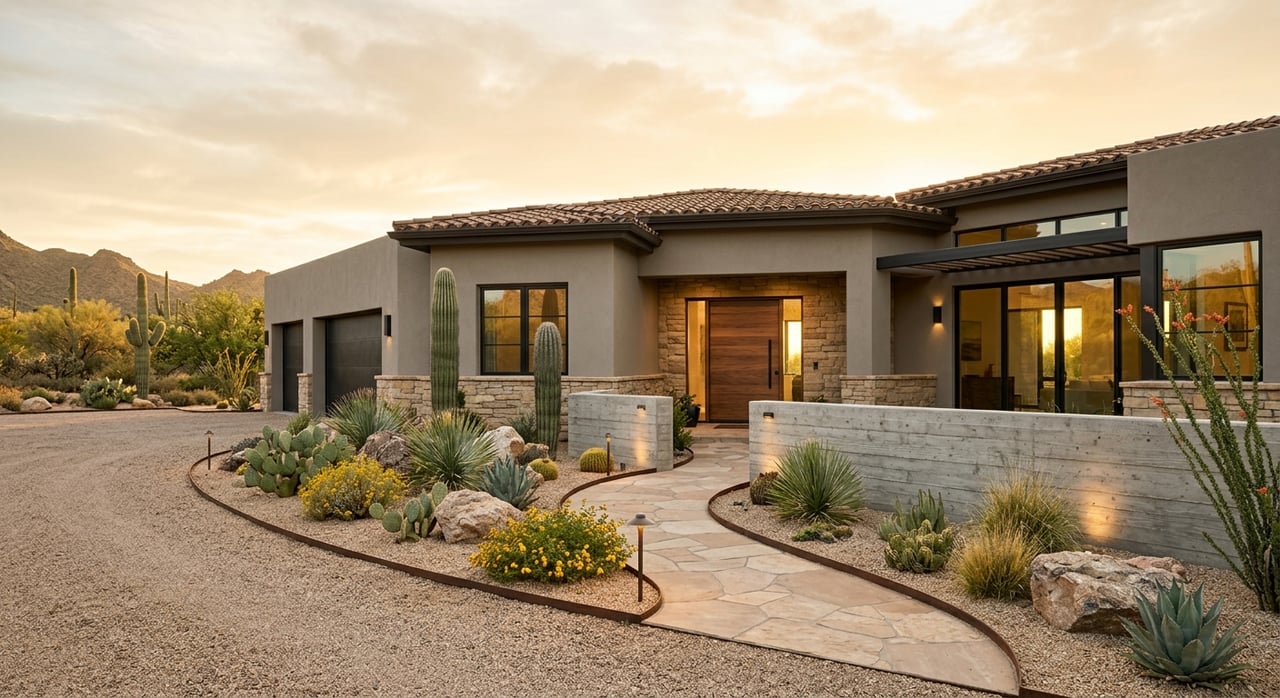
The town’s buyer information also makes something clear: many residential areas are in Desert Rural zones, many properties touch or cross trail corridors, and many roads are rural or private. That shapes everyday life in practical ways. In Cave Creek, outdoor living is not just a backyard feature. It is part of how the town is organized.
Trails Shape the Lifestyle
One of Cave Creek’s strongest lifestyle draws is its multi-use trail network. The town says the network connects portions of Cave Creek to Cave Creek Regional Park, Spur Cross Ranch Conservation Area, the Tonto National Forest, the Maricopa Trail, and Desert Foothills Land Trust properties. These routes support hiking, biking, and horseback riding, and some trail segments run near the town core’s shops and restaurants.
That matters if you want a home that supports an active daily routine without a long drive to get outdoors. In some parts of Cave Creek, the trail experience starts close to your front door. For many buyers, that creates a very different rhythm than a typical master-planned setting.
Shared Trails Mean Shared Use
Cave Creek’s trail network is non-motorized only, and horses have right-of-way on shared trails. If you are new to the area, that is an important detail because it reflects the town’s long-standing equestrian character. It also reinforces why trail-adjacent living in Cave Creek feels more rural and more connected to the landscape.
If horses, riding access, or a quieter pace are part of your ideal setup, this is a meaningful point of distinction. Not every desert community offers that same mix of trail access and equestrian presence.
Regional Park Access Adds Daily Value
Cave Creek Regional Park covers 2,934 acres near town and offers 16 miles of multi-use trails according to Maricopa County. The county describes it as having a far-from-the-city feel even though it sits close to local neighborhoods. For buyers, that means you can enjoy a broad outdoor setting without feeling remote from everyday conveniences.
Spur Cross Ranch Conservation Area adds another layer to the outdoor mix. It covers 2,154 acres and offers more than 12 miles of trails, along with a horse staging area and multi-use routes. The county also highlights the area’s higher elevation, dense vegetation, and riparian setting along Cave Creek, which gives it a distinct feel compared with more open desert terrain.
Trail-Oriented Home Search Areas
The town trail map shows corridors through or near areas such as Morning Star, Continental Mountain Estates, Desert Enclave, Black Mountain Summit, Canyon Ridge Estates, and Spur Cross. For a buyer, those names are useful because they help frame a search around access and lifestyle rather than just price or square footage. If your goal is to step outside and quickly connect to trails, location within Cave Creek matters.
That said, not every visible path in the desert is public access. The town notes that many parks and open spaces are bordered by state trust land, and legal recreation on state land requires a permit. If you are evaluating a trail-oriented property, it is wise to verify what access is formal, what is nearby, and what use is permitted.
Golf Living Comes in Two Distinct Styles
Cave Creek also appeals to buyers who want golf as part of the lifestyle, but the golf picture here is not one-size-fits-all. The two signature golf anchors suggest different residential patterns and different moods. That gives you more than one way to define outdoor luxury.
Rancho Mañana Offers Resort-Adjacent Character
Rancho Mañana Golf Club is one of Cave Creek’s signature golf amenities. The town describes it as a par-70 championship layout with dramatic elevation changes, unspoiled desert terrain, abundant wildlife, and the rustic character of a historic dude ranch that is now part of the resort property. It is located at the corner of Spur Cross and Cave Creek roads.
For buyers, this area suggests a more historic and resort-adjacent feel. If you are drawn to desert character, elevation, and a setting that feels rooted in Cave Creek’s identity, Rancho Mañana stands out. It is a good fit for those who want golf access without losing the town’s rustic desert appeal.
Dove Valley Ranch Offers Golf-Community Structure
Dove Valley Ranch Golf Club represents a different kind of golf living. Troon describes it as a daily-fee resort course that opened in 1998 as the key amenity in an 850-acre master-planned golf community. That context points to a more structured golf-community environment compared with the historic character around Rancho Mañana.
If your preference leans toward a planned neighborhood pattern with golf as a central amenity, Dove Valley Ranch may align more closely with your goals. It can appeal to buyers who want the desert setting and golf lifestyle with a more defined community framework.
Quiet Luxury Fits Cave Creek Naturally
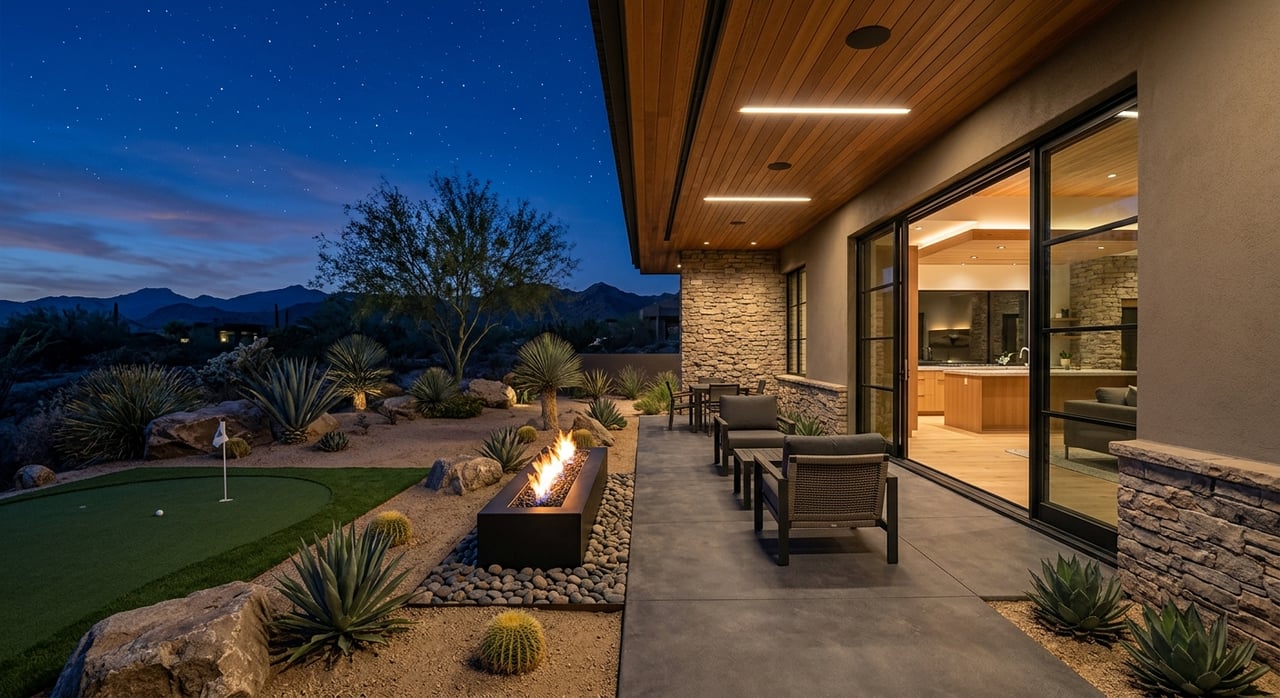
In many markets, luxury outdoor living is associated with bigger lighting packages, brighter yards, and more visual showmanship. Cave Creek takes a different approach. The town says its dark night sky is one of the reasons people choose to live here, and it has outdoor-lighting rules designed to reduce light pollution, preserve the rural atmosphere, and protect astronomical observations.
Those rules require fully shielded fixtures that cast light downward, limit security lights to low-profile motion-sensor styles, and ban dusk-to-dawn lights. In simple terms, outdoor design in Cave Creek works best when it is subtle and intentional. That is where the idea of quiet luxury becomes more than a design trend. It becomes part of how the town lives.
Outdoor Spaces That Match the Setting
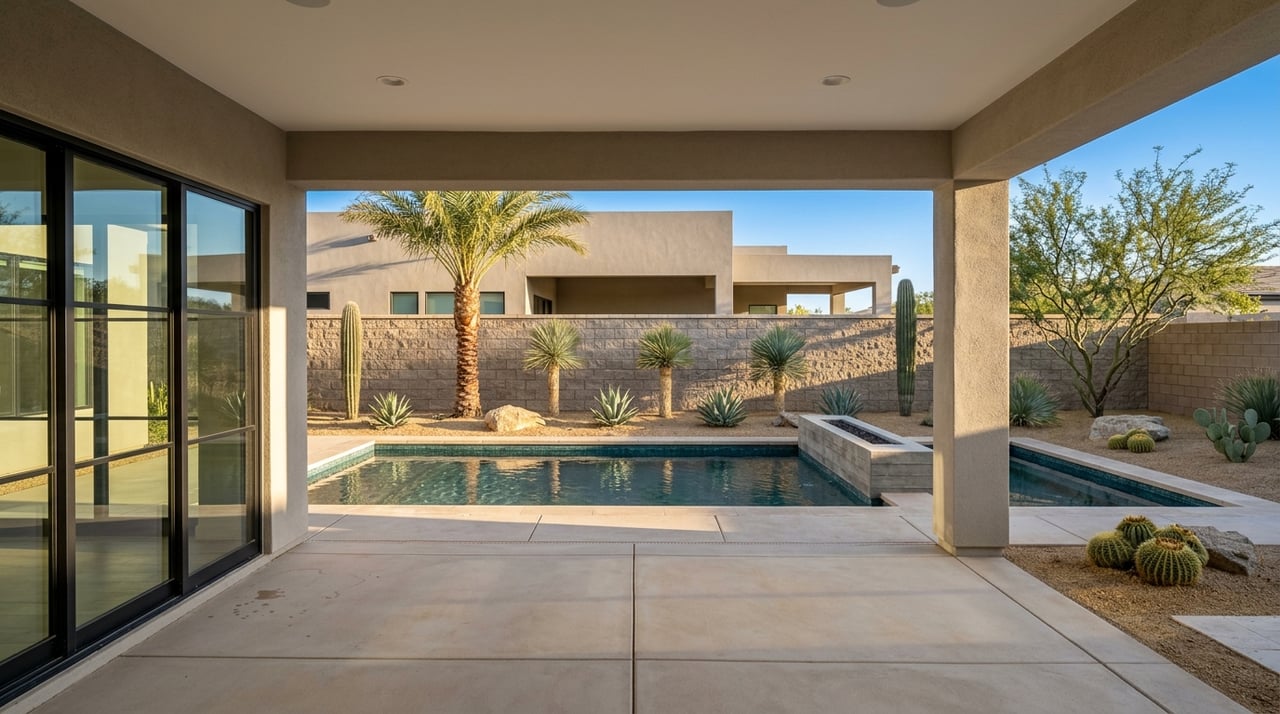
If you are buying in Cave Creek, the most successful outdoor spaces often feel integrated with the land rather than imposed on it. Covered patios, seating areas oriented to mountain or desert views, and low-glare lighting can complement the setting far better than highly illuminated entertainment zones. The goal is often comfort, privacy, and atmosphere.
This matters especially for discerning buyers who want a home that feels elevated without feeling overstated. In Cave Creek, restraint often reads as sophistication. The environment itself does a lot of the work.
Property Types That Match the Lifestyle
Cave Creek’s land-use pattern helps narrow which homes are the best fit for different buyers. The town’s buyer notice says many residential areas are in Desert Rural zones, and ranching plus the possession of horses or other livestock are allowed on at least two contiguous acres in a DR zone. Combined with the town’s trail network and golf anchors, that creates several clear lifestyle categories.
Trail-First Homes
Trail-first homes are often the best fit if your priority is direct or near-direct access to hiking, biking, or horseback routes. These properties are especially relevant in north and central Cave Creek, particularly in areas shown on the town trail map. For buyers who want the outdoors to shape daily life, this is often the first category to explore.
Golf-First Homes
Golf-first homes tend to cluster near Rancho Mañana or within the Dove Valley Ranch golf community. Here, the decision is often less about whether you want golf and more about what type of golf setting feels right. Some buyers prefer resort-adjacent character, while others prefer a master-planned golf environment.
Acreage and Equestrian Homes
Acreage and equestrian homes are usually the strongest match if privacy, horses, larger outdoor living areas, or a more rural setting are your priorities. In Cave Creek, larger lots can support a very different lifestyle than homes in denser desert communities. If you want room to spread out and build daily life around the land itself, this category deserves close attention.
What Buyers Should Evaluate Carefully
Cave Creek’s appeal is strong, but it rewards a thoughtful home search. Because many roads are rural or private, access and maintenance can vary from one property to another. Trail proximity, zoning, horse allowances, and permitted uses are also details worth confirming early in the process.
It is also helpful to think beyond a simple Cave Creek-versus-Scottsdale comparison. In Cave Creek, the bigger question is often this: do you want a home positioned for trails, golf, or acreage and equestrian use? Once you answer that, the search usually becomes much clearer.
For many luxury buyers and right-sizers, that clarity is what makes Cave Creek compelling. You are not just choosing a house. You are choosing how you want to live in the desert, day to day and season to season.
If you are considering a move in Cave Creek and want a discreet, strategy-first approach to finding the right fit, The Hillstone Group | Jeff D Hill can help you evaluate trail-oriented, golf-adjacent, and acreage properties with the care and precision that luxury decisions deserve.
FAQs
What makes outdoor living in Cave Creek different from other Phoenix-area communities?
- Cave Creek is shaped by open space, non-motorized trails, rural land patterns, equestrian access, and dark-sky lighting standards that support a quieter desert lifestyle.
What trail options are available for Cave Creek homebuyers?
- Cave Creek’s trail network connects to Cave Creek Regional Park, Spur Cross Ranch Conservation Area, the Tonto National Forest, the Maricopa Trail, and Desert Foothills Land Trust properties, with access for hiking, biking, and horseback riding.
What golf communities define Cave Creek outdoor living?
- Rancho Mañana and Dove Valley Ranch are the two main golf anchors, with Rancho Mañana offering a resort-adjacent desert setting and Dove Valley Ranch reflecting a master-planned golf-community pattern.
What should buyers know about horses and trails in Cave Creek?
- Horses have right-of-way on shared trails, and some Desert Rural properties may support horses or livestock on at least two contiguous acres, depending on zoning and property specifics.
What should buyers verify before choosing a trail-adjacent Cave Creek home?
- You should confirm formal trail access, road type, zoning, permitted uses, and whether nearby land includes state trust land that may require a recreation permit for legal access.